- 24/7 Industrial Support Available
- +86(512)58990319
- vp@jsxtbkj.com
Scott-T Transformer (Three-Phase to Two-Phase Conversion)
Product Overview
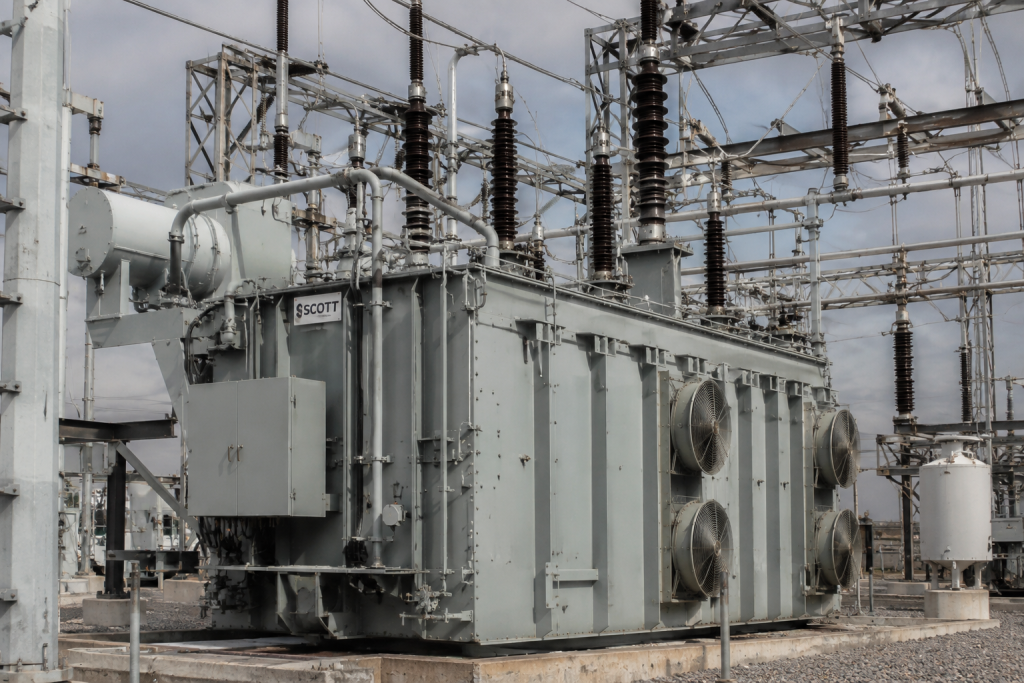
The Scott-T transformer is a specialized magnetic conversion device designed to transform a three-phase alternating current (AC) power supply into a balanced two-phase AC power supply (or vice versa). Constructed by interconnecting two single-phase transformers—designated as the main transformer and the teaser transformer—this unit maintains balanced loading across all three phases of the primary source while delivering two orthogonal (90-degree phase-shifted) output voltages. It serves as a critical power interface for legacy two-phase industrial equipment, precision electric servo motors, and specialized AC traction or furnace systems.
Key Features
1.Balanced Three-Phase Loading: Despite converting power to a two-phase output, the Scott-T winding configuration ensures that currents drawn from the primary three-phase supply remain symmetrical, preventing phase voltage unbalance on the utility grid.
2.Orthogonal Two-Phase Output: Delivers two secondary output voltages that are exactly 90 degrees out of phase with each other, providing the precise symmetrical waveforms required by two-phase servomotors and specialized control systems.
3.High-Permeability Magnetic Core: Built using precision-stacked, cold-rolled grain-oriented (CRGO) silicon steel laminations to minimize no-load core losses and eliminate flux distortion across the interconnected main and teaser cores.
4.Rigid Mechanical Winding Bracing: Coils are wound using high-conductivity electrolytic copper and structurally reinforced with high-density pressboard insulation to withstand mechanical stresses and thermal expansion during heavy industrial operation cycles.
5.Custom Voltage Matching: Can be custom-engineered with various primary input voltages (e.g., 480V, 415V, 380V) and specific secondary output voltages to match exact equipment requirements without external phase-shifting networks.
Technical Specifications
1.Rated Power Capacity: 5 kVA to 500 kVA
2.Primary Input: Three-Phase, 3-wire or 4-wire (Standard voltages: 208V, 380V, 480V, 600V)
3.Secondary Output: Two-Phase, 3-wire or 4-wire (Standard voltages: 120V, 240V, 480V)
4.Phase Shift Angle: Exactly 90 degrees between secondary phases
5.Frequency: 50 Hz / 60 Hz
6.Cooling Method: AN (Air Natural / Dry-Type) or ONAN (Oil-Immersed, depending on capacity)
7.Winding Material: 100% Electrolytic Copper (Primary and Secondary)
8.Insulation Class: Class F (155°C) or Class H (180°C) for dry-type units
9.Applicable Standards: IEC 60076, IEEE C57.12.01, ANSI C57.12.00
Primary Applications
1.Industrial Servo Systems: Powering legacy two-phase AC servomotors used in heavy manufacturing, older automated machinery, and precision positioning equipment.
2.Electric Furnace Control: Supplying balanced two-phase power for specific specialized electric heating and resistance furnace applications.
3.Railway and Traction Signaling: Providing specific two-phase configurations required by older railway signaling and track-switching control networks.
4.Laboratory Testing & Research: Serving as a dedicated conversion bench unit for testing two-phase electrical prototypes using standard three-phase laboratory power supplies.
What is the main purpose of a Scott-T transformer?
The primary purpose of a Scott-T transformer is to convert a three-phase power supply into a two-phase power supply while keeping the three-phase source completely balanced. This allows two-phase electrical equipment to operate efficiently from a standard three-phase grid without causing voltage unbalance or overloading a single phase.
How does the Scott-T connection achieve two-phase output from three-phase input?
The Scott-T connection uses two single-phase transformers: the “main” transformer and the “teaser” transformer. The main transformer is connected across two lines of the three-phase supply with a center tap. The teaser transformer has a specific tapping point at 86.6% of its winding) connected to the center tap of the main transformer, while its other end connects to the third phase. This geometric ratio creates two output voltages that are equal in magnitude and separated by an exact 90-degree phase angle.
Why is the teaser transformer tap set at 86.6%?
The 86.6% tapping point is mathematically required to equalize the voltage magnitude of the teaser transformer secondary with that of the main transformer secondary. Because the height of an equilateral triangle formed by three-phase voltages is equal to 86.6% of its side, the teaser winding must be proportioned accordingly to ensure the two resulting secondary output voltages are symmetrical.
Can a Scott-T transformer be used in reverse (two-phase to three-phase)?
Yes. The Scott-T transformer is completely reversible. It can take a two-phase supply (such as from a specialized two-phase generator or legacy source) and convert it into a balanced three-phase output to power standard three-phase loads.
Are Scott-T transformers dry-type or oil-immersed?
They can be manufactured as either dry-type or oil-immersed. For lower and medium power ratings (up to a few hundred kVA) used in indoor industrial control cabinets or laboratories, dry-type air-cooled configurations are most common. For high-capacity utility or heavy industrial installations, oil-immersed configurations are utilized for superior thermal dissipation.