- 24/7 Industrial Support Available
- +86(512)58990319
- vp@jsxtbkj.com

Low-Voltage Magnetic Transformer (12V / 24V AC)
Product Overview
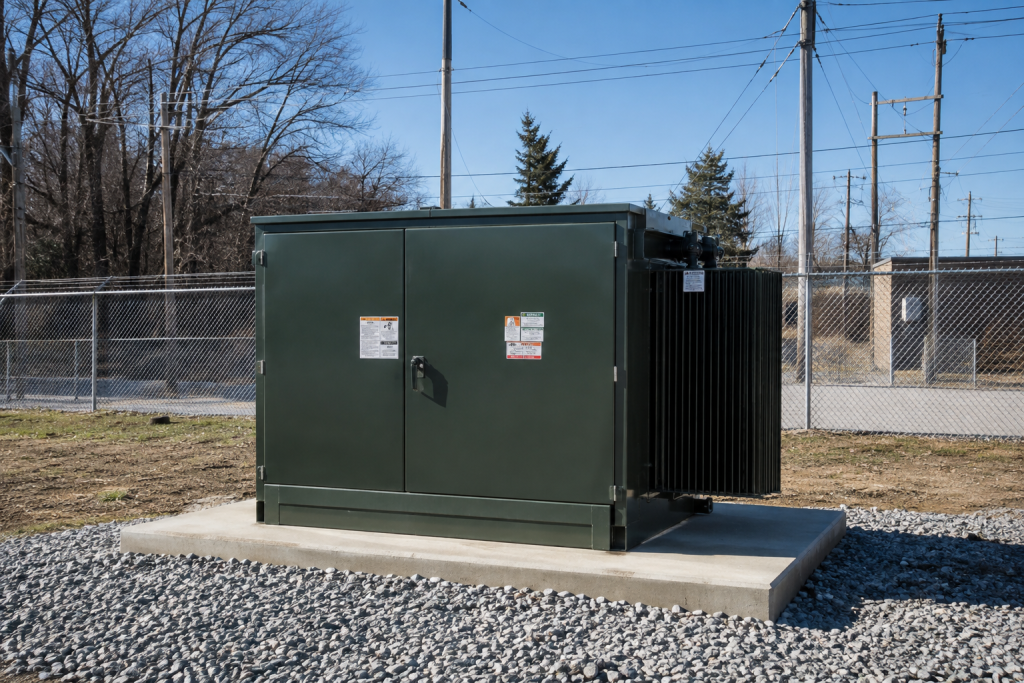
The low-voltage magnetic transformer is a step-down power conversion device that reduces standard line voltage (120V, 240V, or 277V AC) to a safe operating voltage (typically 12V or 24V AC) utilizing electromagnetic induction. Constructed with a heavy-duty laminated iron core and tightly wound primary and secondary copper coils, this unit operates at grid frequencies (50 Hz / 60 Hz). It serves as the primary power source for outdoor landscape lighting, underwater illumination, and commercial low-voltage track networks, offering high tolerance against voltage transients and extreme environmental conditions.
Key Features
1.Zero Minimum Load Requirement: Unlike high-frequency electronic transformers, magnetic transformers do not require a minimum wattage load to operate. This allows them to power single, low-wattage LED fixtures without causing flickering or circuit dropout.
2.MLV Dimming Compatibility: Engineered to be fully compatible with Magnetic Low Voltage (MLV) forward-phase (leading-edge) dimmers. The inductive characteristics of the copper and iron construction allow for smooth, continuous voltage reduction across the entire dimming range.
3.High Transient Immunity: The physical thermal mass of the EI or toroidal steel core provides inherent resistance to grid surges, voltage spikes, and lightning transients, preventing catastrophic failure of downstream lighting components.
4.Epoxy Encapsulation: The entire core and coil assembly is fully potted in high-grade thermal epoxy resin. This encapsulates the internal components, dampening the mechanical vibration (transformer hum) and completely sealing the electrical pathways against moisture, dust, and corrosive elements.
5.Multi-Tap Voltage Outputs: Often equipped with multiple secondary output taps (e.g., 12V, 13V, 14V, 15V). This allows electrical contractors to compensate for voltage drop over long wire runs, ensuring that distant fixtures receive the correct operating voltage.
6.Auto-Reset Protection: Features integrated primary and secondary thermal circuit breakers. During a short circuit or severe overload condition, the breaker trips to interrupt power. It automatically resets once the fault is cleared and the internal temperature drops to safe levels.
Technical Specifications
1.Power Capacity (VA Rating): 40 W to 1200 W
2.Primary Input Voltage: 120V, 230V, 240V, or 277V AC
3.Secondary Output Voltage: 12V AC, 24V AC (Multi-tap options: 12V/13V/14V/15V)
4.Operating Frequency: 50 Hz / 60 Hz
5.Core Configuration: EI Laminated Steel or Toroidal Core
6.Dimming Protocol: Forward-Phase / Leading-Edge MLV Dimming
7.Enclosure Rating: NEMA 3R (Indoor/Outdoor rated) / IP65
8.Enclosure Material: Powder-coated steel or Type 304/316 Stainless Steel
9.Insulation Class: Class B (130°C) or Class F (155°C)
10.Applicable Standards: UL 2108, UL 1838, CSA C22.2
Primary Applications
1.Landscape & Hardscape Lighting: Powering low-voltage path lights, up-lights, and wall wash fixtures in outdoor architectural and garden environments.
2.Underwater Illumination: Supplying galvanically isolated low voltage to sealed LED or halogen fixtures in swimming pools, fountains, and water features.
3.Commercial Rail & Track Lighting: Driving low-voltage decorative or display lighting networks in retail stores and galleries.
4.Neon & Cold Cathode Signage: Providing stable inductive step-down power for specific commercial architectural signage systems.
What is the difference between a magnetic and an electronic transformer?
A magnetic transformer uses a physical iron core and copper wire to step down voltage, operating at the standard grid frequency (50/60 Hz). It is heavier, larger, and highly durable. An electronic transformer uses solid-state components (inverters) to increase the frequency to 20 kHz or higher, allowing for a much smaller and lighter device. However, electronic transformers are more susceptible to heat, require a minimum load to function, and generally have a shorter lifespan outdoors.
Why is my magnetic transformer buzzing or humming?
All magnetic transformers produce a slight mechanical hum. This is caused by magnetostriction—the alternating expansion and contraction of the steel core laminations at 60 Hz. While a low hum is normal, an excessively loud buzzing indicates a problem. Common causes include an overloaded circuit, loose mounting hardware vibrating against the wall, or the use of an incompatible standard incandescent dimmer instead of an MLV dimmer.
Do I need a special dimmer for a magnetic transformer?
Yes. Magnetic transformers require a Magnetic Low Voltage (MLV) dimmer. These dimmers use forward-phase (leading-edge) phase-control technology specifically designed to handle the inductive load of the copper coils. Using a standard incandescent dimmer or an Electronic Low Voltage (ELV) dimmer will cause severe flickering, overheating, and eventual failure of the dimmer or the transformer.
What is voltage drop, and why are multi-tap transformers used?
Voltage drop is the loss of electrical voltage caused by the resistance of the wire over a long distance. In a 12V system, even a 2V drop will cause distant lights to appear significantly dimmer. Multi-tap magnetic transformers provide terminals with slightly higher voltages (e.g., 14V or 15V). By connecting a long wire run to a higher tap, the contractor ensures that exactly 12V reaches the fixtures at the end of the line.
Can a magnetic transformer be installed outdoors?
Yes, provided it is housed in a NEMA 3R (or higher) rated enclosure. The NEMA 3R rating ensures the unit is protected against falling rain, sleet, and external ice formation. Furthermore, high-quality outdoor magnetic transformers have their internal core and coils completely potted in epoxy resin, providing an additional layer of weatherproofing against high humidity and condensation.