- 24/7 Industrial Support Available
- +86(512)58990319
- vp@jsxtbkj.com

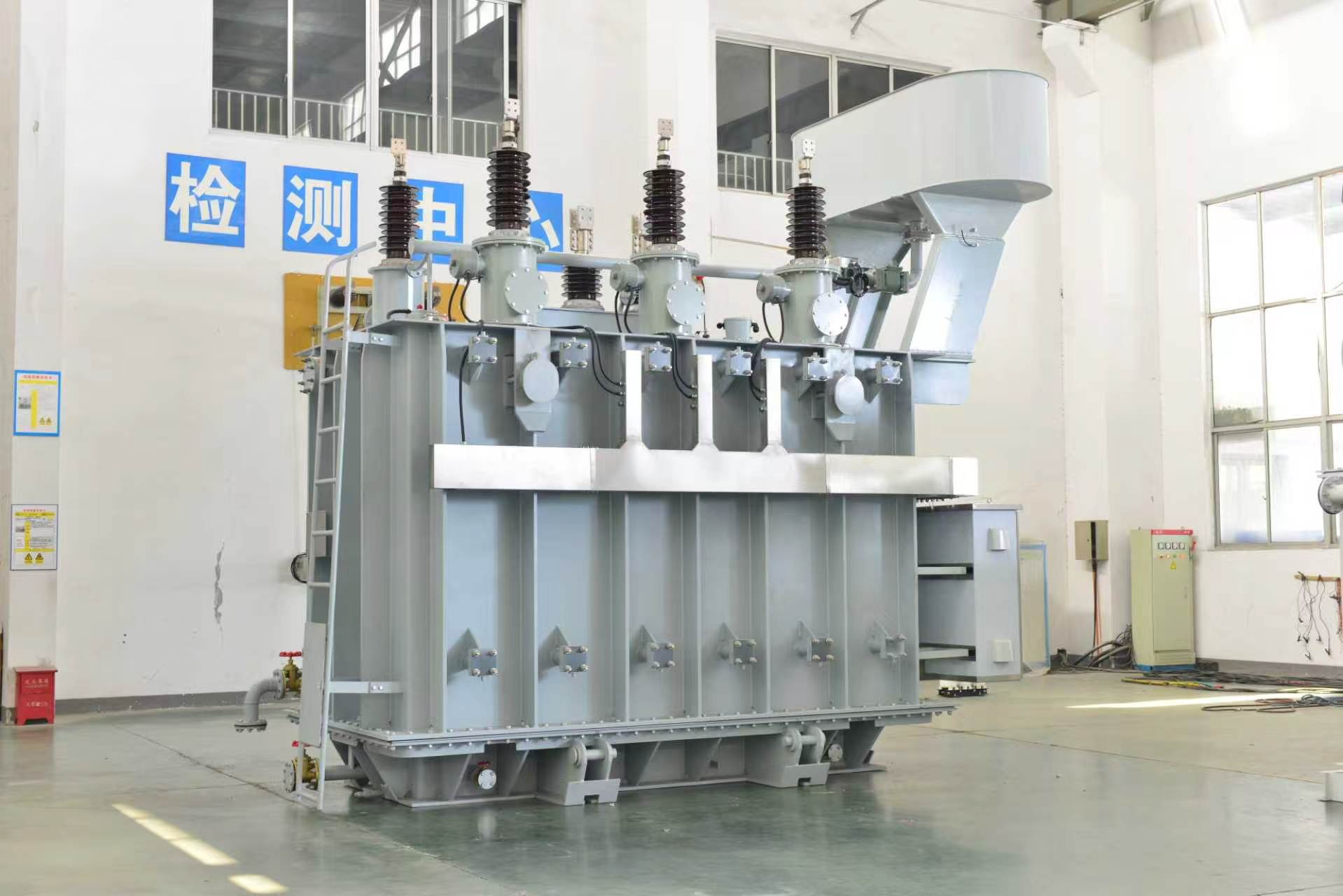
High-Efficiency Power Transformer (10MVA – 500MVA)
Product Overview
The power transformer is a static electrical device designed to step up or step-down voltage levels within a high-voltage transmission network. Engineered for continuous full-load operation, this transformer ensures minimal load losses and maintains voltage stability across substations, power generation plants, and heavy industrial facilities. It operates on electromagnetic induction, utilizing a high-grade silicon steel core and electrolytic copper windings to facilitate efficient power transfer between circuits.
Key Features
1.Low Core Loss Design: Constructed with cold-rolled grain-oriented (CRGO) silicon steel sheets. The step-lap joint technology reduces no-load losses, operating noise, and magnetizing current.
2.Optimal Thermal Management: Features multiple cooling configurations including ONAN (Oil Natural Air Natural), ONAF (Oil Natural Air Forced), and OFAF. The radiator design maximizes surface area for heat dissipation, preventing insulation degradation during peak load cycles.
3.Short-Circuit Mechanical Strength: High-density pressed board insulation and epoxy-coated transposed cables (CTC) are used in the winding process. This configuration absorbs and withstands axial and radial mechanical stresses during short-circuit faults.
4.Hermetically Sealed Tank: The corrugated steel tank isolates the insulating oil from atmospheric moisture and oxygen, extending the dielectric life of the oil and reducing maintenance frequency.
5.On-Load Tap Changer (OLTC): Integrated for automatic voltage regulation without interrupting the power supply, maintaining secondary voltage within specified limits despite primary grid fluctuations.
Technical Specifications
1.Rated Power Capacity: 10 MVA to 500 MVA
2.Primary Voltage Range: 33 kV, 66 kV, 110 kV, 220 kV, 400 kV (Customizable)
3.Frequency: 50 Hz / 60 Hz
4.Vector Group: YNd11, YNyn0, Dyn11 (Compliant with IEC 60076)
5.Cooling Method: ONAN / ONAF / OFAF / ODAF
6.Impedance Voltage: 8% to 14% (Depending on capacity rating)
7.Insulation Class: Class A (Standard)
8.Ambient Temperature Range: -25°C to +40°C
9.Applicable Standards: IEC 60076, ANSI/IEEE C57.12.00, GOST
Primary Applications
1.Utility Substations: Voltage step-up at generation sites and step-down at distribution grid intake points.
2.Renewable Energy Integration: Connecting wind farms and utility-scale solar arrays to the national electrical grid.
3.Heavy Industry: Supplying stable, high-capacity power to steel mills, chemical processing plants, and mining operations.
4.Railway Electrification: Providing specific voltage levels required for traction power networks.
What is the life expectancy of a power transformer?
Under standard operating conditions and with regular maintenance, a power transformer has a typical operational lifespan of 25 to 30 years. Regular dissolved gas analysis (DGA) and oil filtration can extend this period by preventing dielectric breakdown.
What is the difference between a power transformer and a distribution transformer?
Power transformers are used in transmission networks for high voltage step-up or step-down applications (typically above 33kV) and operate at near 100% load continuously. Distribution transformers are used to step down voltage for end-user consumption (usually below 33kV) and operate under variable loads throughout the day.
How is the efficiency of this transformer calculated?
Efficiency is the ratio of output power to input power. This unit operates at over 99% efficiency at full load. The minimal energy loss is primarily divided into copper losses (load dependent) and iron losses (constant), both minimized through our specific winding and core construction.
Does this transformer require regular maintenance?
Yes. Standard maintenance includes annual visual inspections, checking silica gel breathers, testing dielectric strength of the insulating oil, and verifying the calibration of the Buchholz relay and winding temperature indicators.
What protective devices are included with the transformer?
Standard protective accessories include a Buchholz relay (for internal fault gas detection), Pressure Relief Device (PRD), Oil Temperature Indicator (OTI), Winding Temperature Indicator (WTI), and a magnetic oil level gauge.