- 24/7 Industrial Support Available
- +86(512)58990319
- vp@jsxtbkj.com
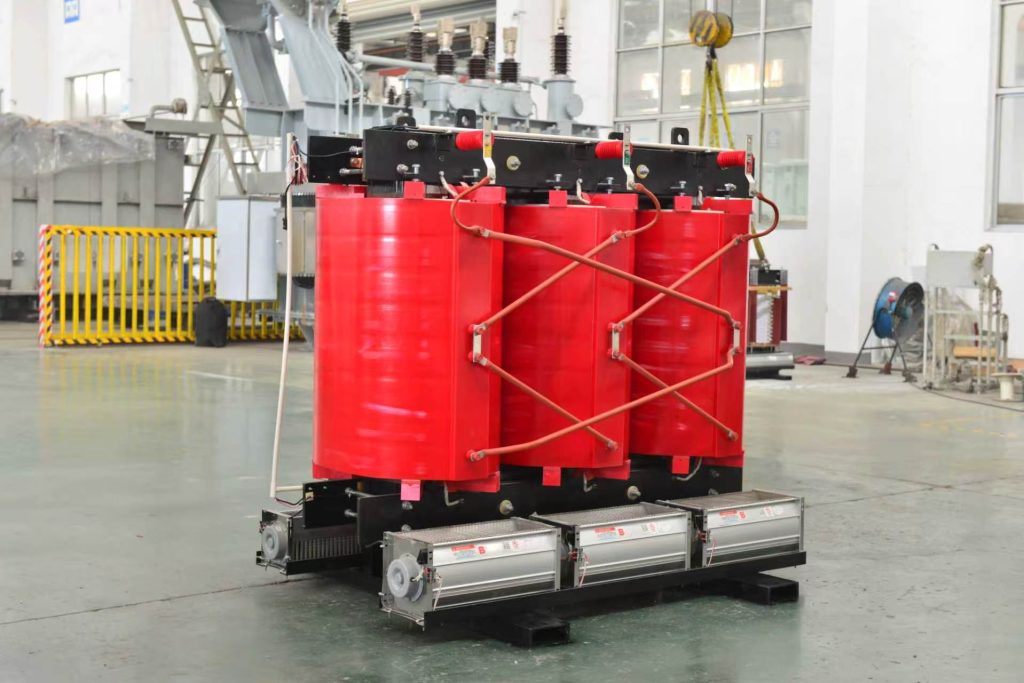
Cast Resin Dry Type Transformer (50 kVA – 20 MVA)
Product Overview
The cast resin dry-type transformer is a solid-state electrical voltage conversion device that utilizes ambient air for cooling and epoxy resin for insulation, completely eliminating the need for liquid dielectrics. Designed specifically for indoor installations and environmentally sensitive applications, this transformer mitigates fire risks and chemical leaks. It provides stable step-down or step-up voltage regulation for commercial buildings, industrial facilities, and confined distribution networks where strict fire safety codes apply.
Key Features
1.Fire Resistant and Non-Combustible: Windings are encapsulated in flame-retardant, self-extinguishing epoxy resin. The absence of insulating oil eliminates the risk of pool fires, making it compliant with strict indoor electrical safety regulations.
2.Moisture and Environmental Immunity: The vacuum casting process completely seals the high-voltage and low-voltage coils. This construction prevents moisture ingress and allows the transformer to operate reliably in highly humid or heavily polluted environments (Environmental Class E2/E3).
3.Low Partial Discharge: Manufactured using a vacuum pouring process under strict temperature controls, keeping the partial discharge level strictly below 10 pC. This prevents premature degradation of the insulation system and extends equipment life.
4.Zero Liquid Maintenance: Requires no oil level checks, dissolved gas analysis (DGA), or oil filtration. Maintenance is limited to routine visual inspections and periodic cleaning of air channels to remove accumulated dust.
5.High Overload Capability: The thermal mass of the cast resin coils allows the transformer to handle temporary overloads. When equipped with optional cross-flow cooling fans (AF cooling), the rated output capacity can be increased by up to 40% during peak demand periods.
Technical Specifications
1.Rated Power Capacity: 50 kVA to 20 MVA
2.Primary Voltage: 6.6 kV, 11 kV, 22 kV, 33 kV, 35 kV
3.Secondary Voltage: 400V, 415V, 433V, 690V
4.Frequency: 50 Hz / 60 Hz
5.Insulation Class: Class F (155°C) or Class H (180°C)
6.Cooling Method: AN (Air Natural) / AF (Air Forced)
7.Enclosure Protection Rating: IP00 (Core and Coils only), IP20, IP23, up to IP54 (Custom enclosures available)
8.Partial Discharge: ≤ 10 pC
9.Vector Group: Dyn11, Yyn0 (Compliant with IEC 60076-11)
10.Applicable Standards: IEC 60076-11, IEEE/ANSI C57.12.01, EN 50541-1
Primary Applications
1.High-Rise Commercial Buildings: Safe indoor installation close to load centers to reduce low-voltage cable costs.
2.Data Centers: Providing highly reliable, fire-safe power distribution for server racks and critical HVAC systems.
3.Underground Transport and Tunnels: Meeting stringent non-flammable material regulations for subway systems and railway tunnels.
4.Healthcare Facilities: Ensuring safe and stable power supply in hospitals where fire hazards must be strictly minimized.
5.Marine and Offshore: Withstanding corrosive environments and vibration on vessels and oil platforms.
What is the main advantage of a dry-type transformer over an oil-filled transformer?
The primary advantage is safety. Dry-type transformers use air and solid resin for insulation instead of highly flammable oil. This eliminates the risk of fire and oil spills, allowing them to be installed indoors, directly inside buildings, underground, or in environmentally protected areas without the need for fire-proof vaults or oil catch basins.
Where should a dry-type transformer be installed?
Because they do not pose a fire or leak hazard, dry-type transformers are typically installed indoors, as close to the electrical load as possible. Common locations include electrical rooms in commercial buildings, data centers, factory floors, and underground transit stations. They require adequate room ventilation to dissipate the heat generated during operation.
What is the difference between cast resin and VPI dry-type transformers?
Cast resin transformers have their high-voltage (and sometimes low-voltage) coils completely encased in a solid block of epoxy resin cast under vacuum. VPI (Vacuum Pressure Impregnation) transformers use coils that are dipped in a polyester or epoxy varnish and baked. Cast resin types offer superior protection against moisture, dust, and mechanical short-circuit forces compared to VPI types.
Do dry-type transformers require cooling fans?
They can operate safely without fans using Air Natural (AN) cooling up to their base rated capacity. However, adding forced air (AF) cooling fans can increase the transformer’s load capacity by 25% to 40%. Fans are usually controlled by a temperature monitor connected to PT100 sensors embedded in the low-voltage windings.
How long does a cast resin dry-type transformer last?
Under normal operating conditions with ambient temperatures within specified limits and proper ventilation, a cast resin dry-type transformer has an expected operational lifespan of 20 to 25 years. Preventing dust buildup in the cooling channels is the primary factor in ensuring maximum longevity.